

Finding the right keywords is the cornerstone of any successful SEO strategy, but the traditional process can be a time-consuming grind. Sifting through endless spreadsheets and manually grouping terms is no longer an efficient use of your resources. This is where AI keyword research tools fundamentally change the game, automating the most laborious parts of the process and uncovering opportunities you might otherwise miss. These platforms go beyond simple volume and difficulty metrics, offering sophisticated features like semantic grouping, competitive gap analysis, and content optimisation powered by machine learning.
This comprehensive guide is designed to help you navigate the growing market of AI-driven SEO solutions. I have personally tested and analysed the leading platforms to give you a clear, practical overview. Instead of generic marketing copy, you will find an honest assessment of each tool's core strengths, potential limitations, and ideal use cases. For example, I’ll explain how I use one tool for high-level competitor analysis and another for generating specific long-tail questions for a FAQ section. I will explore specific features that solve real-world problems, from identifying high-intent long-tail keywords to structuring entire content clusters for topical authority.
Inside, you will discover a detailed breakdown of 12 top-tier AI keyword research tools, including Semrush, Ahrefs, Surfer SEO, and Keyword Insights AI. Each review includes screenshots for a clear visual reference and direct links to get you started. My goal is to equip you with the insights needed to select the perfect tool that aligns with your specific budget, workflow, and strategic objectives, whether you're an e-commerce manager for a Shopify store, a freelance content creator, or a digital marketing agency. Let’s find the right tool for you.
Semrush positions itself as more than just a tool; it's a complete digital marketing and SEO visibility suite. While it has long been a heavyweight in traditional SEO, its integration of AI has significantly enhanced its keyword research capabilities, making it one of the most powerful AI keyword research tools available today. The platform is not just about finding keywords; it’s about understanding the entire strategic landscape around them.
The AI-powered features, such as the AI Copilot, offer personalised recommendations based on your project's data, moving beyond generic advice. Its ContentShake AI streamlines the process from research to creation, helping you build articles around your target keywords. This all-in-one approach is what truly makes Semrush stand out. Instead of juggling multiple subscriptions, I find I can manage keyword discovery, competitor analysis, backlink audits, and content planning all within one ecosystem. For a deep dive into the fundamentals of this process, you can find a comprehensive guide on what keyword research is and how to do it.
Semrush offers a free, albeit limited, plan. Paid tiers start at $139.95 per month, which can be a significant investment for freelancers or small businesses. The sheer volume of features can also present a steep learning curve for beginners, though the interface itself is well-organised.
Ahrefs is a powerhouse in the SEO industry, renowned for its colossal backlink index and incredibly robust site analysis tools. While it may not market itself as an "AI-first" platform, its underlying algorithms and massive data processing capabilities function like a sophisticated AI, delivering highly accurate keyword difficulty scores and traffic estimates. This makes it one of the most reliable AI keyword research tools for professionals who prioritise data integrity and depth over AI-driven content generation features.
What I value most about Ahrefs is its unapologetic focus on hard data. When I need to perform a deep competitive analysis or understand the true difficulty of ranking for a term, Ahrefs' Keywords Explorer is my go-to tool. It provides a granular view of the SERP, showing not just who ranks, but the backlink profiles, traffic, and content structure that got them there. This focus on empirical data, processed at an immense scale, is its unique strength.
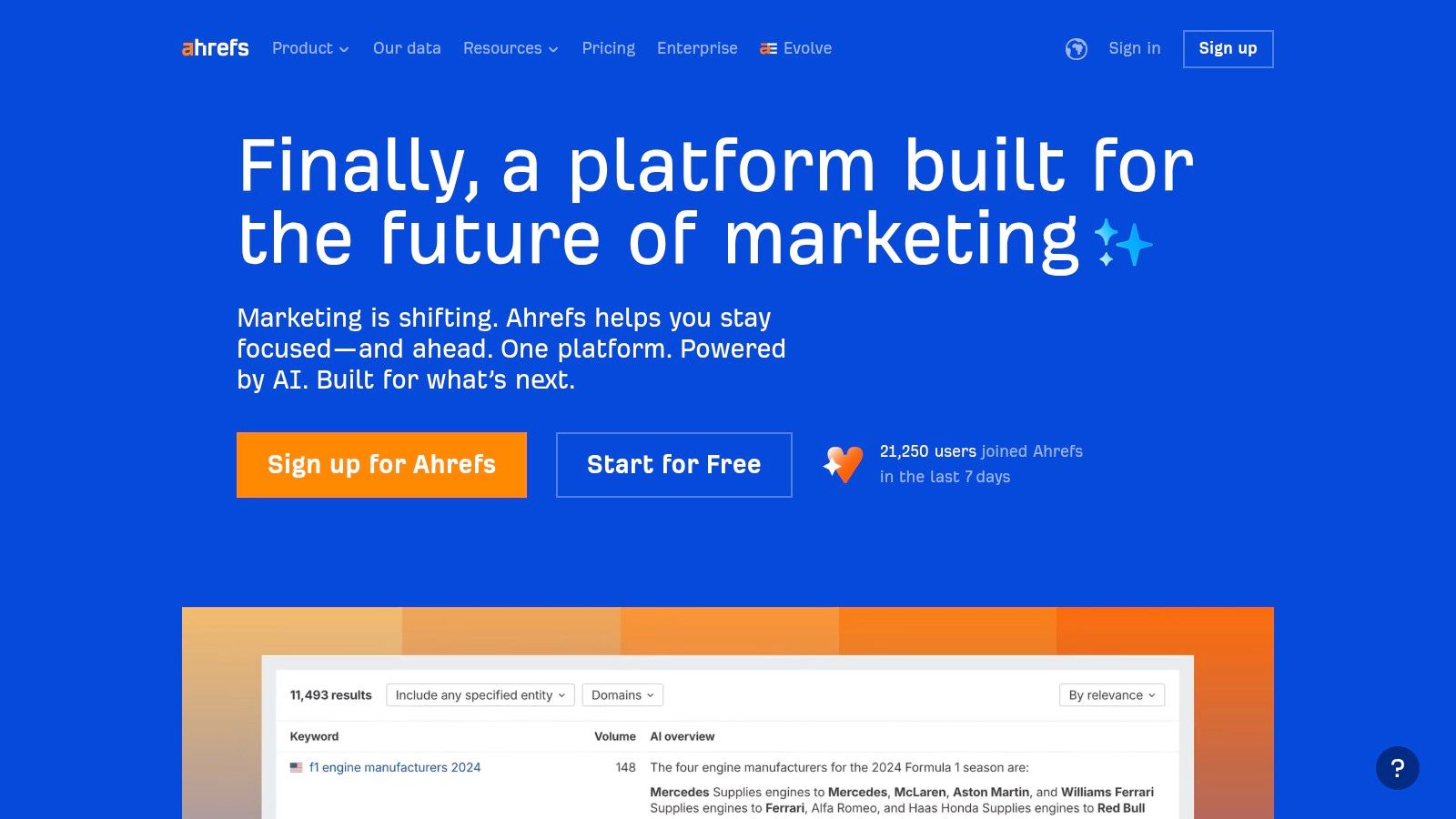
Ahrefs does not offer a free plan, and its paid plans start at $99 per month. This pricing, combined with the sheer depth of its data, can make it intimidating for beginners or those with a limited budget. Unlike all-in-one suites, its primary focus remains on analysis rather than AI content creation.
Surfer SEO specialises in bridging the gap between keyword discovery and content execution. It’s less of a standalone keyword database and more of an AI-powered content optimisation suite that uses keyword research as its foundation. I find its true strength lies in showing you not just what to rank for, but exactly how to structure your content to achieve that ranking, analysing top-performing pages in real-time.
The platform excels by turning abstract keyword data into concrete, actionable steps within its Content Editor. This makes it one of the most practical ai keyword research tools for content creators and SEOs who need to produce optimised articles efficiently. Instead of manually cross-referencing SERP data, Surfer’s AI does the heavy lifting, providing recommendations on word count, structure, and crucial terms to include, all based on what's already successful.
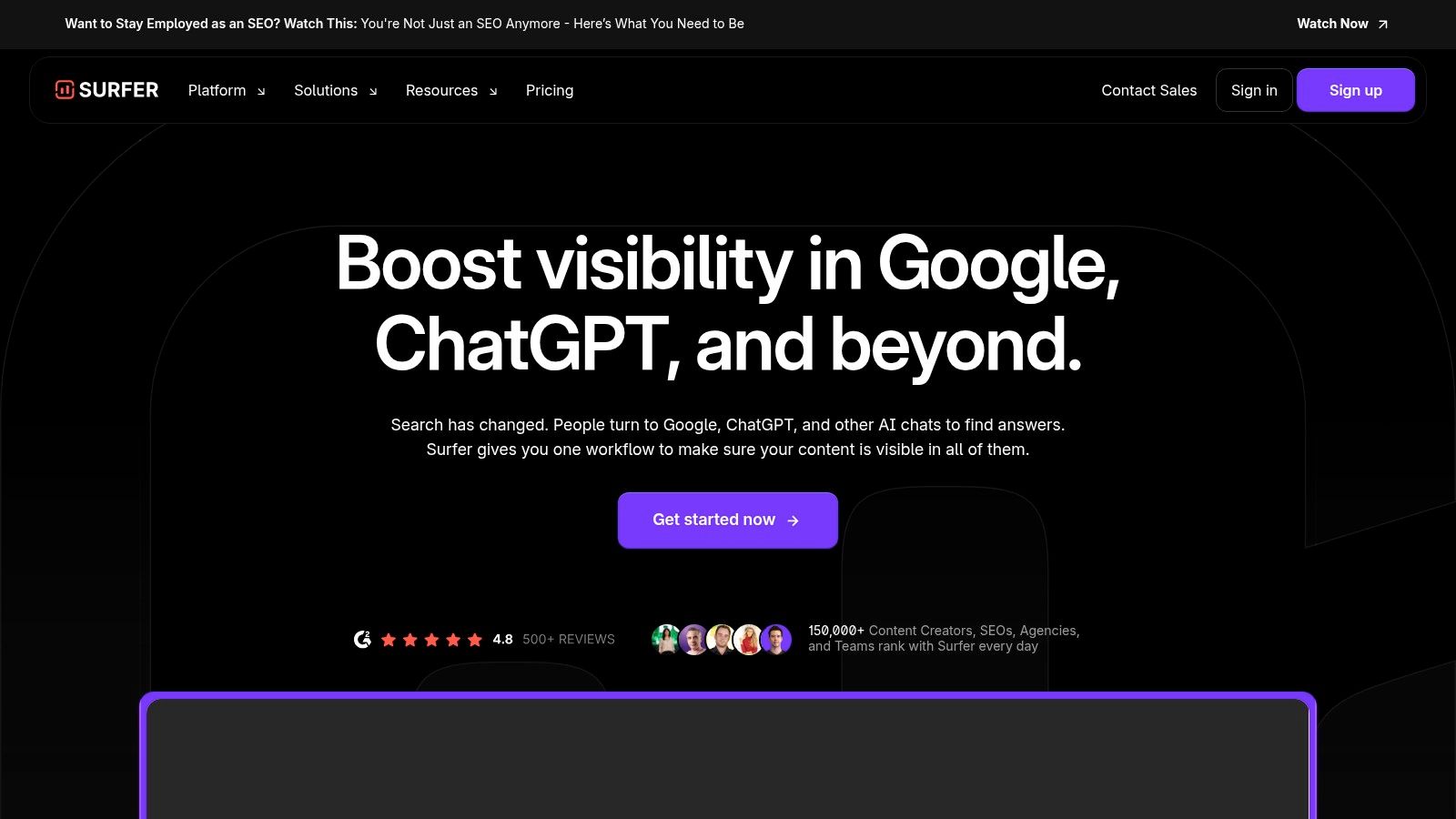
Surfer offers several paid plans, starting from $89 per month. While it provides immense value in content optimisation, its capabilities as a pure, deep-dive keyword discovery tool are less extensive than platforms like Semrush. To get the most out of it, some foundational SEO knowledge is beneficial, as the recommendations are data-heavy and assume a certain level of user understanding. You can learn more at surferseo.com.
Moz Pro has long been a respected name in the SEO industry, known for its user-friendly interface and robust educational resources. While not marketed as an "AI-first" platform in the same vein as some newer entrants, its keyword tools have integrated intelligent data processing to provide prioritised and contextually relevant suggestions, solidifying its place among effective AI keyword research tools. Moz Pro excels at making complex SEO data accessible and actionable, especially for those who might be overwhelmed by more feature-dense alternatives.
The platform provides a solid foundation for any SEO strategy by combining keyword research with other essential functions like site audits and link tracking. I find its "Keyword Priority" score particularly useful; it’s an AI-driven metric that blends volume, difficulty, and organic click-through rate to help me quickly identify the most promising opportunities. This focus on simplified, actionable insights is what makes Moz Pro a dependable choice for building a strong SEO presence from the ground up.
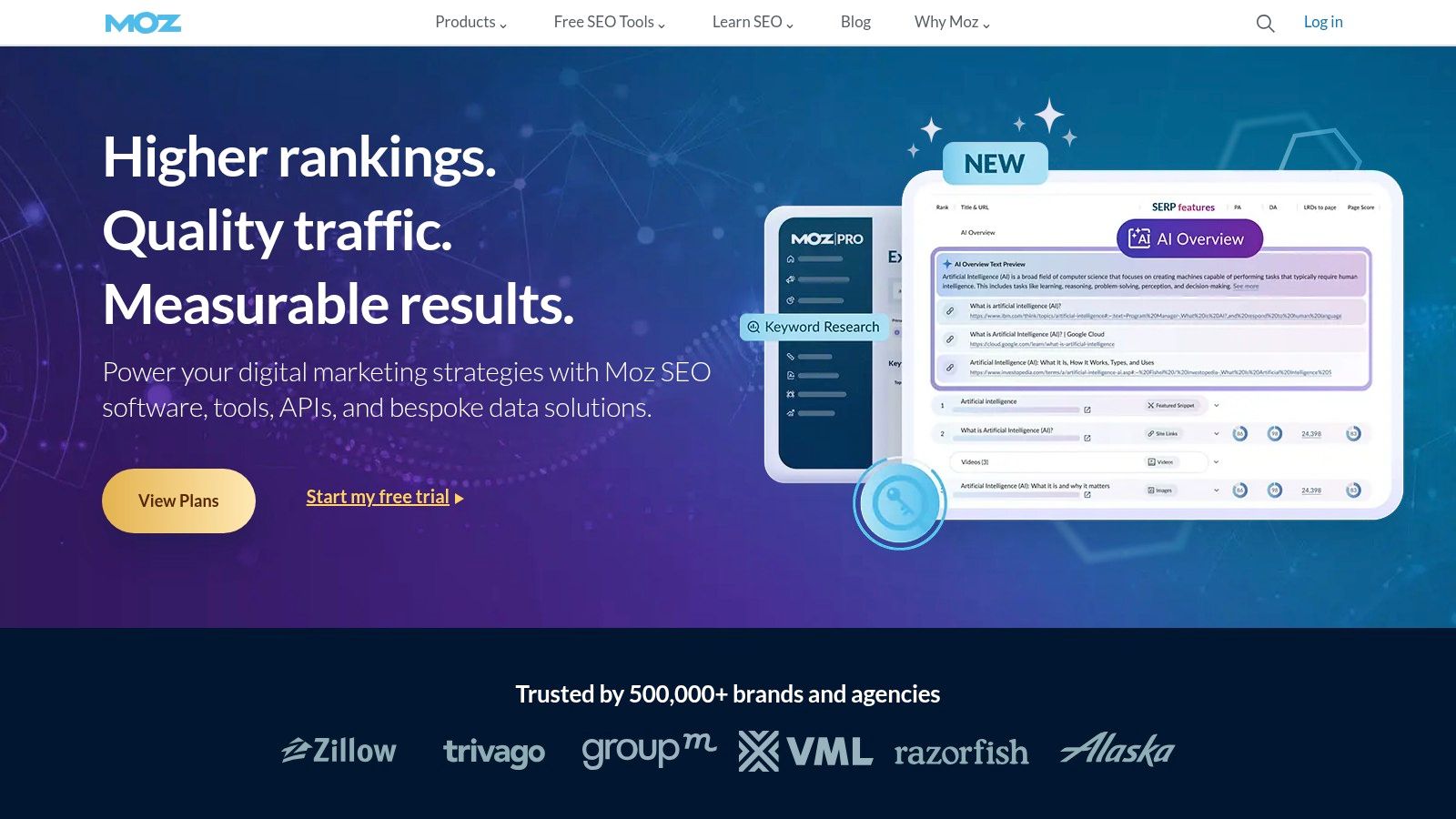
Moz Pro offers a generous 30-day free trial to test its full capabilities. Paid plans begin at $99 per month, making it a more accessible entry point than some of its direct competitors. The main limitation is that its keyword database, while substantial, can sometimes be less extensive than those of platforms like Semrush or Ahrefs, potentially missing some niche long-tail opportunities.
MarketMuse shifts the focus from simple keyword lists to a more holistic, topic-centric strategy. It’s an AI-driven platform designed not just to find keywords, but to help you build comprehensive content authority around them. What I find truly unique is its ability to perform topic modelling and content gap analysis, showing you precisely which related subjects you need to cover to be seen as an expert by search engines. This makes it one of the most strategic AI keyword research tools for those serious about content quality.
Instead of just spitting out keyword variations, MarketMuse provides a detailed roadmap for creating content that genuinely satisfies user intent. It analyses top-ranking content to build a topic model and then scores your own content against it, offering specific recommendations for improvement. This content-first approach helps ensure that the keywords you target are supported by genuinely valuable and authoritative information. For a broader look at platforms like this, you can explore other top AI SEO tools on mersudinforbes.com.
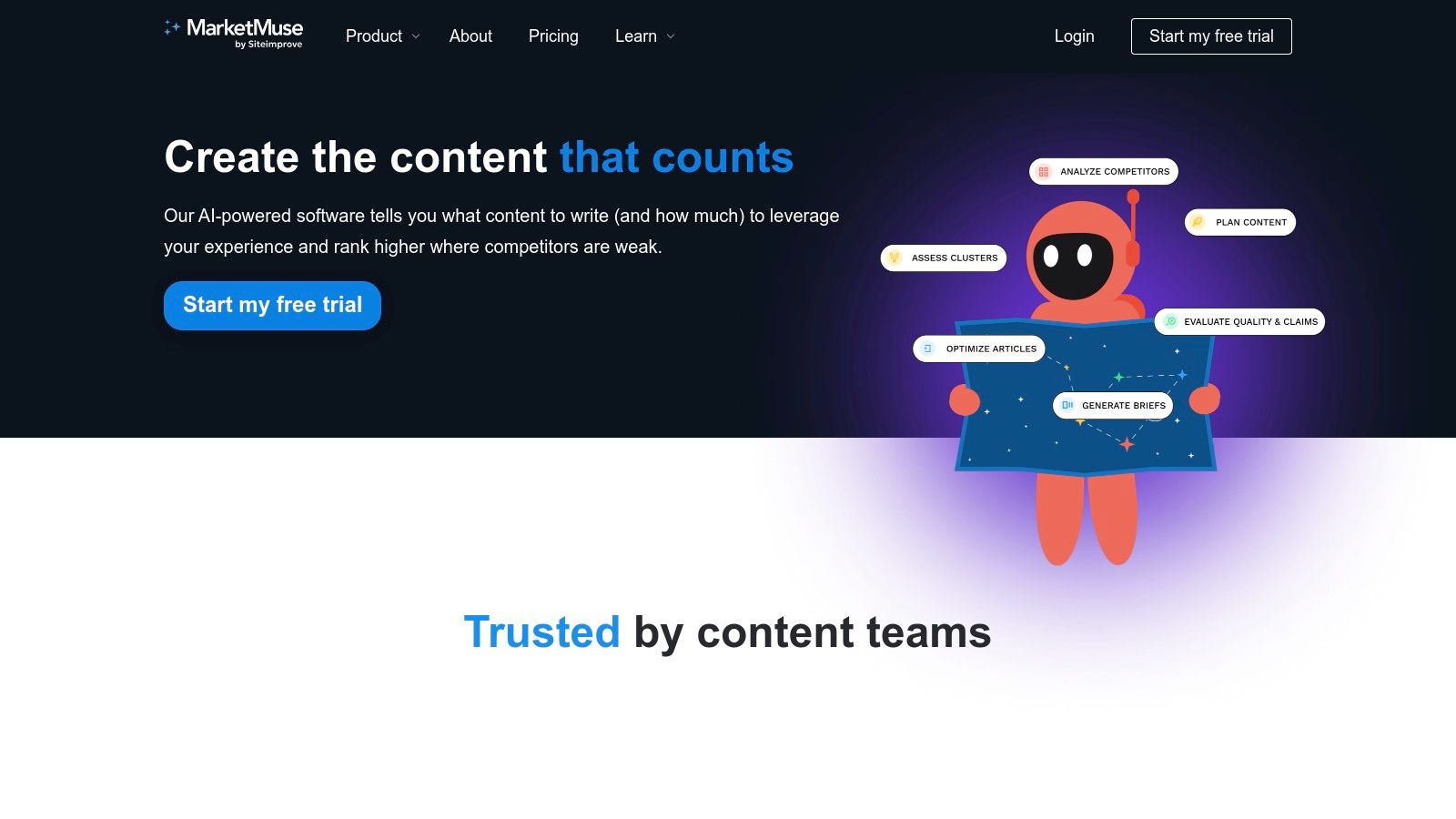
MarketMuse offers a useful free plan, which is great for trying out its core functionality. Paid plans, which unlock more comprehensive features and higher usage limits, start from $99 per month. The platform's primary focus is on content planning and optimisation, so it might feel less like a pure keyword data tool and more like a complete content strategy suite, which may be more than what some users need.
AnswerThePublic takes a uniquely visual and intuitive approach to keyword discovery. Rather than presenting data in spreadsheets, it organises search queries into a striking radial format, resembling a mind map. This visualisation instantly reveals the questions people are asking, making it one of the most user-friendly AI keyword research tools for understanding search intent at a glance. It excels at uncovering the "who, what, where, when, why, and how" queries that are vital for creating comprehensive, user-centric content.
This tool is my go-to when I need to quickly generate a wealth of content ideas for a blog post or FAQ section. The platform, now powered by AI and integrated with data from its parent company NP Digital, transforms raw search data into actionable insights. Instead of just getting a list of keywords, you get a clear picture of the conversations happening around your topic, which is invaluable for brainstorming. For a deeper look into leveraging these insights, it's helpful to understand the fundamentals of an SEO content audit to see where these new ideas fit.

AnswerThePublic offers a limited free plan that allows for a few searches per day. Paid plans are very affordable, starting from around £8.70 per month, making it highly accessible. The primary limitation is that its keyword data, such as search volume and CPC, isn't as deep or precise as what you'd find on more advanced, all-in-one SEO platforms like Semrush or Ahrefs.
Keyword Insights AI is a specialised platform that excels at one of the most time-consuming aspects of keyword research: organisation. It leverages AI to bring order to chaos by automatically clustering vast keyword lists into relevant topical groups and mapping search intent. This approach transforms a raw data dump into a strategic content plan, showing you exactly how to structure your website and pages for maximum topical authority.
What I find most valuable is how it bridges the gap between keyword discovery and content execution. Instead of manually sifting through thousands of keywords to guess which ones belong on the same page, the tool does it for you. This makes it one of the most practical AI keyword research tools for creating pillar pages and content hubs. Its focused functionality means it’s not an all-in-one suite, but a powerful specialist tool that does its core job exceptionally well. For an overview of how this fits into a broader strategy, consider exploring Google's guide to how search works.
Keyword Insights AI offers a highly competitive pricing model, with plans starting from £36 per month (approximately $46). This makes it accessible for freelancers and smaller agencies. The main limitation is that it is a less established platform, so information on its large-scale data coverage and processing capabilities for massive enterprise-level projects can be limited. It is also more of a specialist tool rather than a comprehensive SEO suite.
GetGenie brings the power of AI-driven content and keyword research directly into the WordPress dashboard. It's designed as a native solution for WordPress users, eliminating the need to switch between different applications for research and writing. This tight integration is its core strength, offering a seamless workflow from keyword discovery to publishing a fully optimised post.
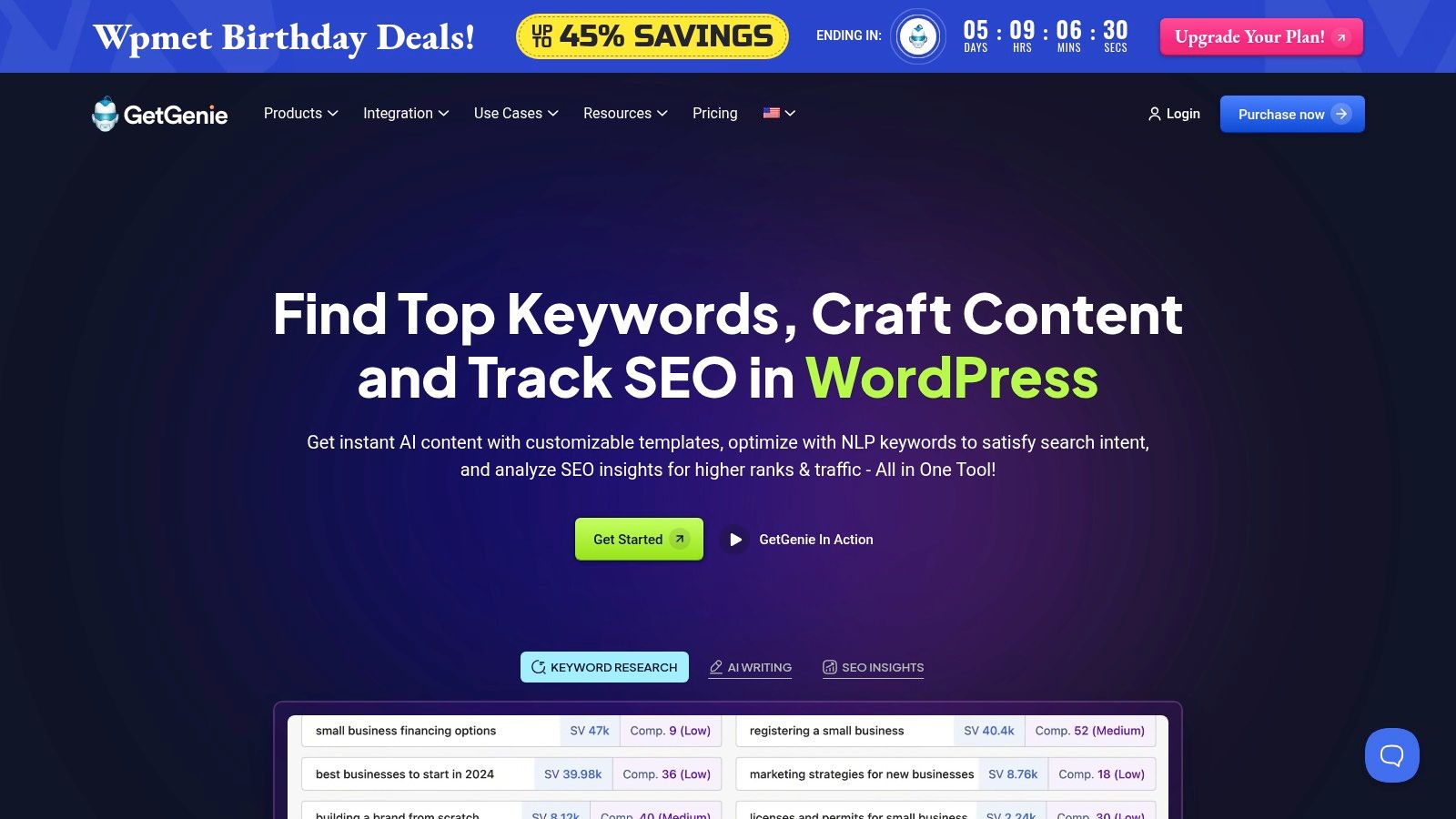
Unlike standalone platforms, GetGenie’s AI operates within your content editor, providing real-time suggestions and analysis as you work. I find this incredibly efficient for creating content at scale without leaving my website's backend. The tool's ability to analyse competitors and provide a real-time content score helps ensure every piece is structured for search engine success from the very beginning. Its features make it a strong contender in the world of SEO automation software, especially for those embedded in the WordPress ecosystem.
GetGenie offers a free plan with limited credits. Paid plans are highly affordable, starting from $14.99 per month. The primary limitation is its exclusivity to the WordPress platform, making it unsuitable for users on other CMSs like Shopify or Squarespace. As a newer tool, some advanced features found in more established suites might still be in development.
SECockpit has long been a favourite among SEO professionals for its depth of data, but the AI Edition elevates it into a formidable contender among modern AI keyword research tools. Its core strength lies in its ability to process massive amounts of keyword data and apply a layer of machine learning to uncover opportunities others might miss. Instead of just presenting metrics, the platform uses AI to analyse keyword intent and commercial value.
I find it particularly useful for large-scale projects where I need to sift through thousands of potential terms quickly. The tool’s AI-driven suggestions go beyond simple variations, often revealing profitable long-tail keywords that have genuine search volume but lower competition. While the interface can feel a bit dated compared to newer, more visually slick platforms, its raw data-crunching power is undeniable.
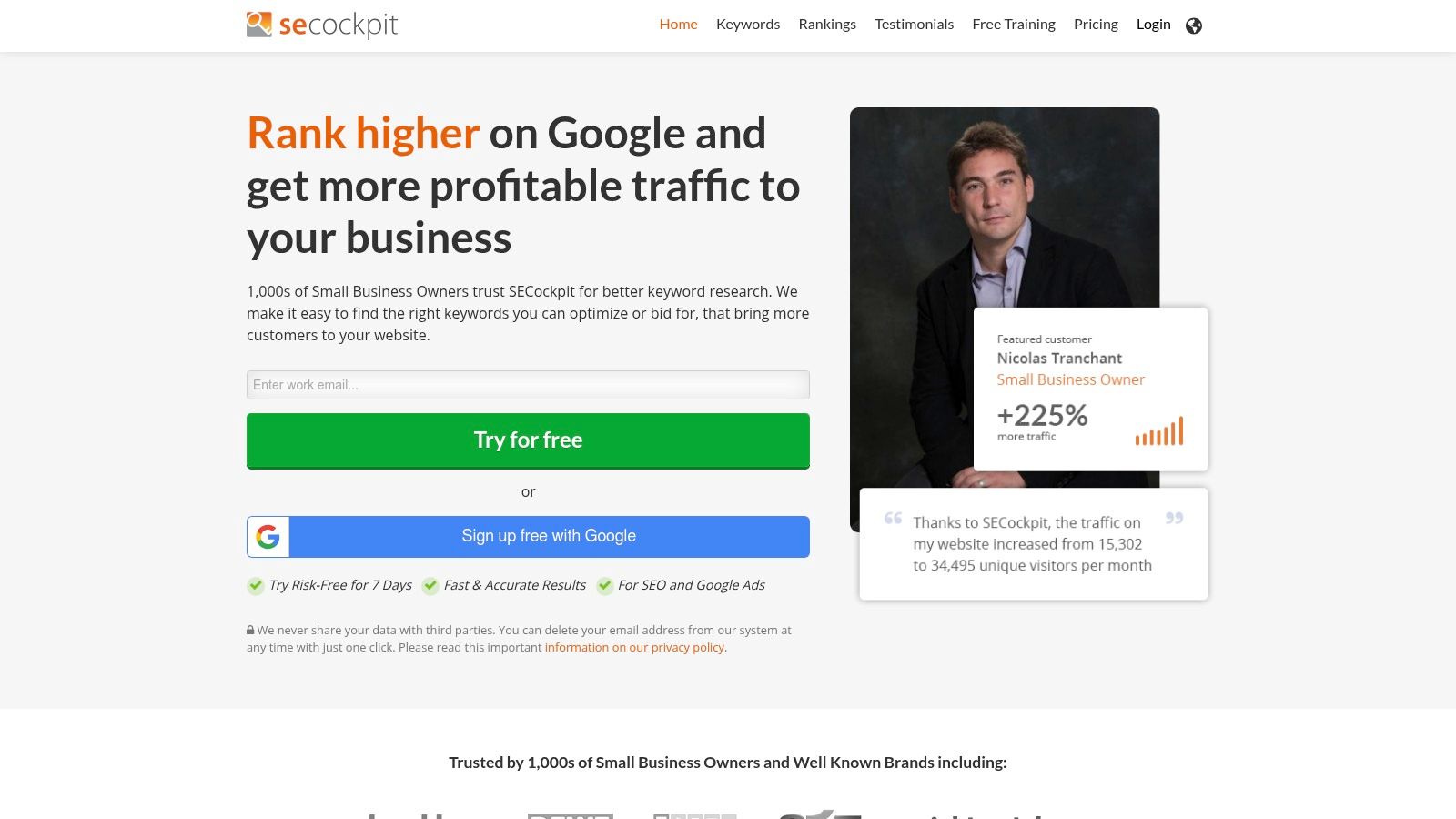
SECockpit offers an attractive entry point with its Personal plan starting at $39.90 per month, making it accessible for freelancers and small businesses. However, the user interface isn't the most intuitive and comes with a learning curve, especially for those new to advanced SEO tools. You can explore the full range of features and pricing on the official SECockpit website.
RankIQ is a highly specialised tool built from the ground up with one user in mind: the blogger. It carves out its niche by using AI to sift through an enormous keyword database, specifically to identify low-competition, high-traffic potential topics that bloggers can realistically rank for. This laser focus means it cuts through the noise of more complex, enterprise-level platforms, offering a clear path from keyword idea to published post.
What I find most effective is how it demystifies the entire content creation process. Instead of just giving you a keyword, RankIQ provides a complete, AI-generated content brief, a content grade, and real-time optimisation tips as you write. It’s less of a pure research tool and more of a complete blogging assistant, guiding you to create content that Google is primed to reward. This makes it an exceptional AI keyword research tool for content creators who need to work efficiently and see results without a steep learning curve.
RankIQ offers refreshingly straightforward pricing, starting at $49 per month. The main limitation is its focused design; it lacks the broad-spectrum SEO features found in tools like Semrush, such as backlink analysis or technical site audits. It is a content tool first and foremost, making it less suitable for large enterprises or SEO agencies managing complex, multi-faceted campaigns.
Developed by digital marketing personality Neil Patel, Ubersuggest positions itself as an accessible and highly affordable entry point into the world of SEO. It has evolved from a simple keyword suggestion scraper into a more robust platform that leverages AI to provide actionable insights, making it one of the more user-friendly AI keyword research tools on the market. Its core strength lies in its simplicity; it presents data, like traffic estimations and competitor analysis, in a way that is easy for beginners and small business owners to understand and act upon.
I find Ubersuggest particularly useful for quick, high-level analysis without the intimidating complexity of enterprise-level suites. It strips down the essentials of keyword research, competitor tracking, and content ideation into a clean interface. While it may not offer the granular data depth of its more expensive counterparts, it provides more than enough information for those just starting their SEO journey or managing smaller projects with limited budgets.
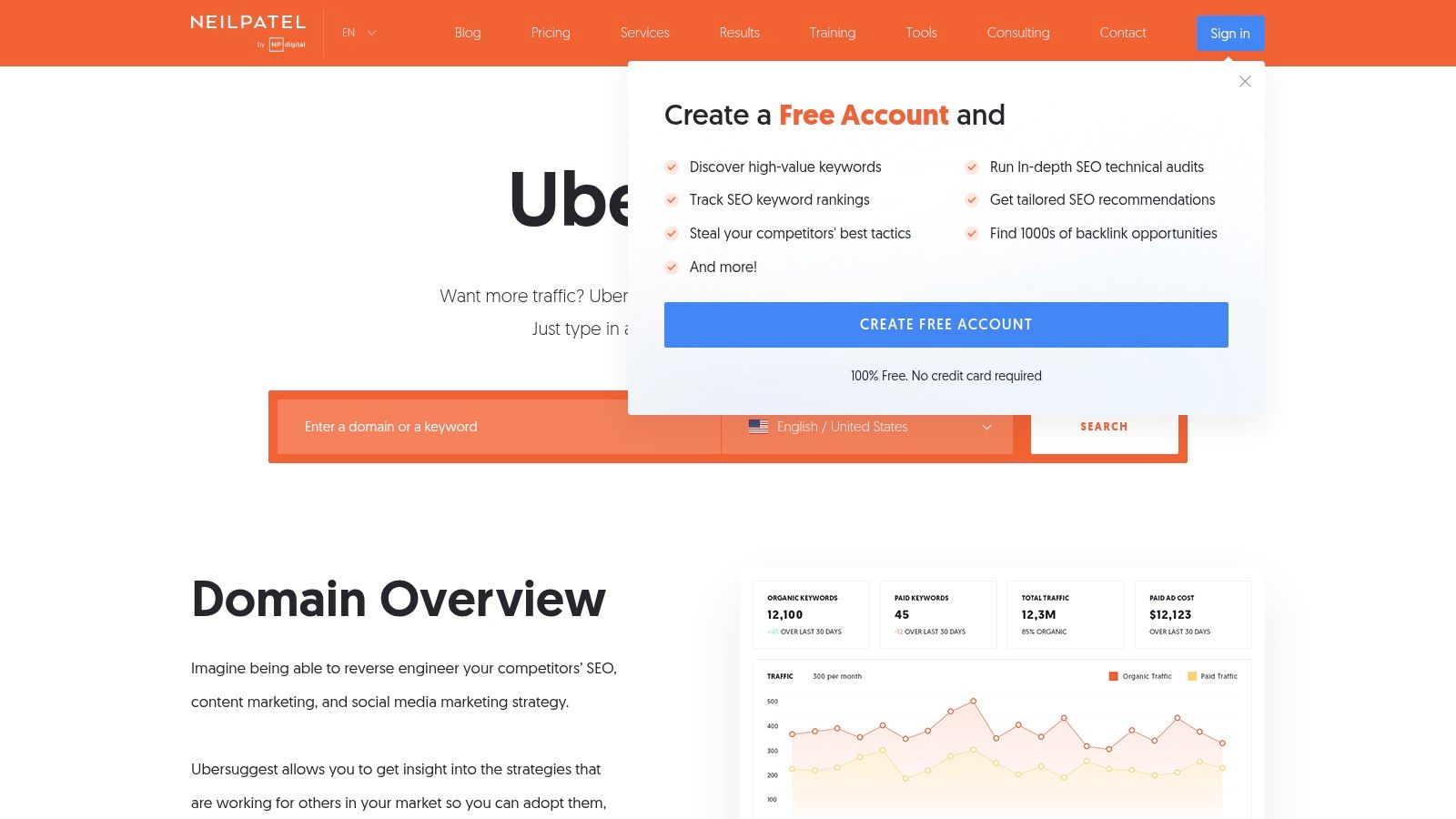
Ubersuggest offers a very generous free tier with daily limits, making it highly accessible. Paid plans are exceptionally affordable, starting at just £29 per month, with lifetime deals often available. The primary limitation is that its data, while useful, can sometimes be less accurate or comprehensive than what you'd find in top-tier tools. For large-scale, data-intensive campaigns, you might find its capabilities restrictive.
Scripted takes a different approach by integrating keyword research directly into a full-scale content creation workflow. Instead of being a standalone analysis tool, it positions itself as an end-to-end platform where AI-powered insights are the first step in a larger process that includes hiring expert writers and managing content production. This makes it one of the more unique ai keyword research tools, as its primary goal is to bridge the gap between discovery and execution seamlessly.
For businesses that find keyword research a prelude to the often challenging task of content creation, Scripted offers a unified solution. I find its model particularly effective for teams that want to outsource writing but retain strategic control over SEO. The platform's AI tools are designed to generate not just keywords but also the content briefs and headlines needed to bring those topics to life, streamlining the entire content lifecycle from a single dashboard.

Scripted operates on a membership model, with plans like Self-Serve Basic and a more comprehensive Cruise Control service. Pricing is not a simple monthly fee for a tool but is tied to the content services, which may be more expensive than standalone keyword tools. Its primary focus is on content creation, so those seeking deep, independent keyword analytics may find it less robust than dedicated SEO suites.
| Tool | Core Features | User Experience | Value Proposition | Target Audience | Price Starting |
|---|---|---|---|---|---|
| Semrush | AI keyword research, site audit, content toolkit | Comprehensive but complex | All-in-one SEO & marketing tools | Marketers & agencies | $139.95/month |
| Ahrefs | Backlink index, keyword & SERP analysis | Detailed, data-heavy | Strong backlink & SEO insights | SEO professionals | $99/month |
| Surfer SEO | Content editor, SERP analyzer, AI writing | User-friendly, real-time feedback | Content optimisation & SEO fusion | Content creators | $89/month |
| Moz Pro | Keyword research, link explorer, rank checker | Easy-to-use, beginner friendly | Comprehensive yet simple SEO tools | Beginners & intermediates | $99/month |
| MarketMuse | Topic modelling, content briefs, optimisation | AI-driven content focus | Strategic content planning | Content marketers | $99/month |
| AnswerThePublic | Search query visualisation, intent insights | Unique visuals, interactive | Search intent & content ideas | Beginners & marketers | £8.70/month |
| Keyword Insights AI | Keyword clustering, intent & competitor analysis | Simplifies keyword data | Focus on intent-driven targeting | SEO specialists | £36/month |
| GetGenie | Keyword suggestions, clustering, SEO scoring | WordPress integration | Multi-language, WordPress focused | WordPress users | $14.99/month |
| SECockpit (AI Ed.) | AI keyword suggestions, gap & backlink analysis | Powerful, large data handling | Large-scale keyword research | Advanced SEO users | $39.90/month |
| RankIQ | Low-competition keywords, traffic scoring | Blogger-focused, real-time tips | AI-driven blogging SEO tool | Bloggers | $49/month |
| Ubersuggest | Keyword suggestions, SERP & traffic analysis | Beginner-friendly, budget tool | Affordable SEO & competitor analysis | Small businesses | £29/month |
| Scripted | Keyword research, content briefs, writer access | Full content creation workflow | End-to-end content & SEO platform | Businesses needing content | Varies (higher) |
I've journeyed through the dynamic landscape of AI keyword research tools, dissecting the offerings of twelve powerful platforms, from established giants like Semrush and Ahrefs to innovative, specialised solutions like Keyword Insights AI and RankIQ. It's clear that the era of manual keyword brainstorming and spreadsheet wrangling is rapidly being superseded by a more intelligent, strategic, and data-driven approach.
The core takeaway is this: artificial intelligence isn't just an add-on; it's a fundamental paradigm shift. These tools are transforming keyword research from a simple act of finding search terms into a sophisticated process of understanding user intent, mapping out customer journeys, and structuring entire content strategies with unparalleled precision. They allow us to move beyond singular keywords to grasp the semantic relationships between topics, organising our efforts into powerful clusters that mirror how search engines like Google now understand information.
Selecting the right tool from this extensive list can feel daunting. The "best" AI keyword research tool is not a one-size-fits-all answer; it's the one that best aligns with your specific context, budget, and strategic goals. To guide your decision, I recommend evaluating your choice based on these three key pillars:
Your Operational Scale and Focus: Are you a solo blogger, a growing e-commerce store, or a large digital marketing agency? A tool like RankIQ is brilliantly streamlined for bloggers, whereas an agency managing multiple clients will likely need the comprehensive suite and project management capabilities of a platform like Semrush or Moz Pro. For e-commerce businesses, tools that excel at identifying long-tail transactional keywords and buyer-intent questions are paramount.
Your Content Workflow Integration: How does this tool fit into your existing content creation process? If your primary focus is on producing perfectly optimised on-page content, a tool like Surfer SEO or GetGenie, which integrates directly into your writing environment, offers immense value. If your strategy is built around programmatic SEO or building topical authority at scale, a solution like Keyword Insights AI, which automates clustering, is a game-changer.
Your Strategic Objective: What is your immediate priority? Is it to quickly identify low-competition keywords to gain initial traction? Platforms like SECockpit or Ubersuggest are excellent for this. Is your goal to establish your brand as a definitive authority in a niche? Then, a content intelligence platform like MarketMuse, which focuses on topic modelling and content comprehensiveness, would be the more strategic investment.
Before you commit to a subscription, I urge you to take these final steps. First, shortlist two or three tools from our list that seem to most closely match your needs based on the framework above. Second, take full advantage of the free trials or freemium versions offered. There is no substitute for hands-on experience. Use this trial period to undertake a real-world project, like planning a content hub or optimising an existing article. This practical application will reveal far more about a tool's utility than any review ever could.
Ultimately, integrating AI keyword research tools into your workflow is no longer an option, it's a necessity for competitive advantage. These platforms provide the insights needed to create content that doesn't just rank, but resonates, answers user needs comprehensively, and drives meaningful business outcomes. The future of SEO is collaborative, intelligent, and powered by AI. By choosing the right co-pilot, you are not just optimising for search engines; you are future-proofing your digital strategy.
Feeling overwhelmed with implementing these strategies or need an expert to build an SEO framework that drives real growth for your business? At Mersudin Forbes Digital, I specialise in leveraging advanced SEO tactics and tools to create bespoke strategies for businesses like yours. Let's connect and discuss how we can elevate your online presence.